
In the ever-evolving skyline of the Philippines, the importance of safe and efficient building maintenance cannot be overstated. When it comes to maintaining skyscrapers and high-rise structures, Building Maintenance Units (BMUs) play a pivotal role in ensuring not only the safety of maintenance personnel but also the longevity of the buildings themselves. This guide takes you on a journey through the heights of safety, shedding light on how BMUs revolutionize building maintenance in the Philippines.
II. Understanding Building Maintenance Units (BMUs)
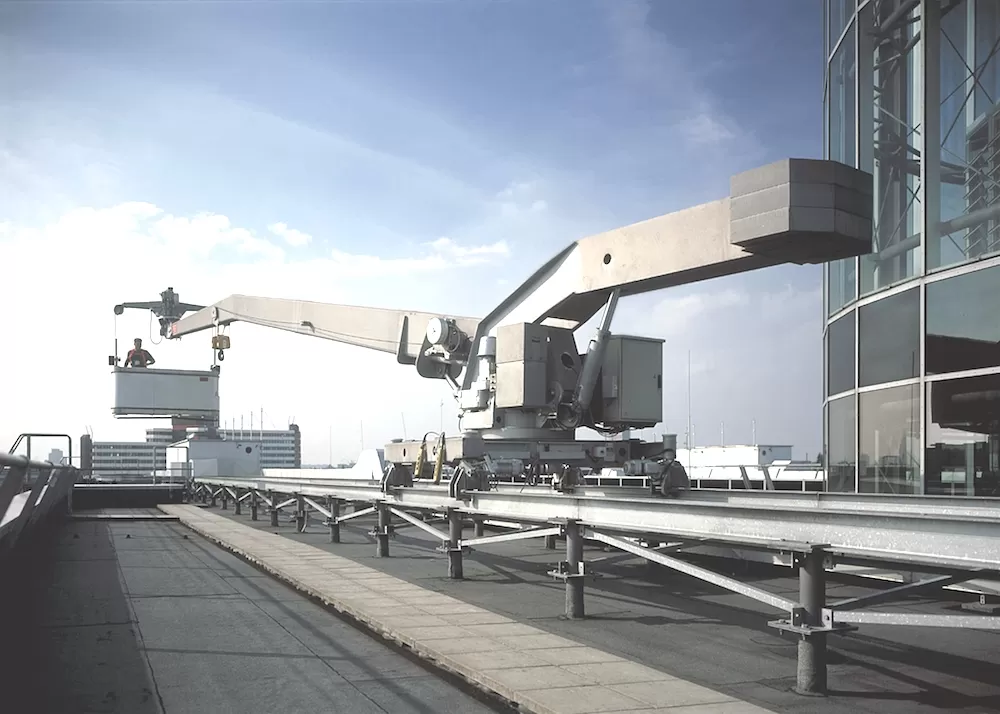
Building Maintenance Units, often referred to as BMUs, are ingenious crane-like systems that hang from a building’s roof, allowing for systematic maintenance tasks on its facade. These systems are carefully engineered to provide support for maintenance workers and their equipment while efficiently covering even the most complex facade geometries. In the Philippines, where modern architectural designs are pushing boundaries, BMUs are indispensable.
III. Components and Features of BMUs
A typical BMU consists of several key components, including a multi-layer drum hoist, four separate wire ropes, and sometimes an auxiliary hoist for specialized tasks such as glass replacement and heavy-duty maintenance. What sets BMUs apart is their adaptability, thanks to the customization options available, ensuring that they can reach and maintain all parts of a building’s facade, even those with an outreach exceeding 30 meters.
IV. BMUs in Action
BMUs operate primarily on a building’s exterior but can also be utilized for courtyard and atrium wall maintenance, making them versatile solutions for a wide range of maintenance tasks. Whether it’s cleaning, painting, or repairs, BMUs streamline these processes with precision.
V. FBA Gomyl: The Trusted Name in BMUs
FBA Gomyl is a trusted name in the world of BMUs, known for its high-quality solutions tailored to functional requirements. They use standardized components and cutting-edge software to design and build BMUs that adhere to European (EN1808) and North American (Machine Directive 2006/42/CEE) standards. In the Philippines, the 828 cable system is their preferred partner, ensuring reliable and efficient equipment solutions for building maintenance needs.
VI. Safety and Efficiency
Safety is paramount in building maintenance. BMUs not only ensure the safety of maintenance personnel but also provide efficiency and ease of operation. What’s remarkable is that you don’t need a Rope Access Technician Certification to operate them, making them accessible to a wider pool of skilled workers.
VII. Advantages of Using BMUs
The advantages of using BMUs are numerous. They are the go-to solution for maintaining great heights, covering complex facade geometries, and ensuring a 360-degree reach around a building’s perimeter. Their modular design allows for augmentation or exclusion of elements based on specific requirements, making them a versatile choice for building maintenance in the Philippines.
VIII. Case Studies
To illustrate the impact of BMUs, let’s delve into a few case studies of successful BMU installations in the Philippines. These real-world examples showcase how BMUs have transformed the way buildings are maintained, ensuring safety and efficiency.
IX. Regulations and Compliance
In the Philippines, as in other parts of the world, safety regulations are crucial. BMUs adhere to stringent regulatory standards such as European (EN1808) and North American (Machine Directive 2006/42/CEE) guidelines. Compliance with these standards is essential for the safe and reliable operation of BMUs.
Takeaway
Building Maintenance Units are more than just cranes hanging from the rooftops of skyscrapers. They represent the heights of safety and efficiency in building maintenance in the Philippines. Thanks to companies like FBA Gomyl and their dedication to quality and compliance, these systems ensure that the architectural wonders of the Philippines remain pristine and safe.